AI traffic lights Australia: who gets through first?
AI traffic lights in Australia could cut red-light delays, but Moreton Bay's trial will test which drivers, buses and walkers get priority.
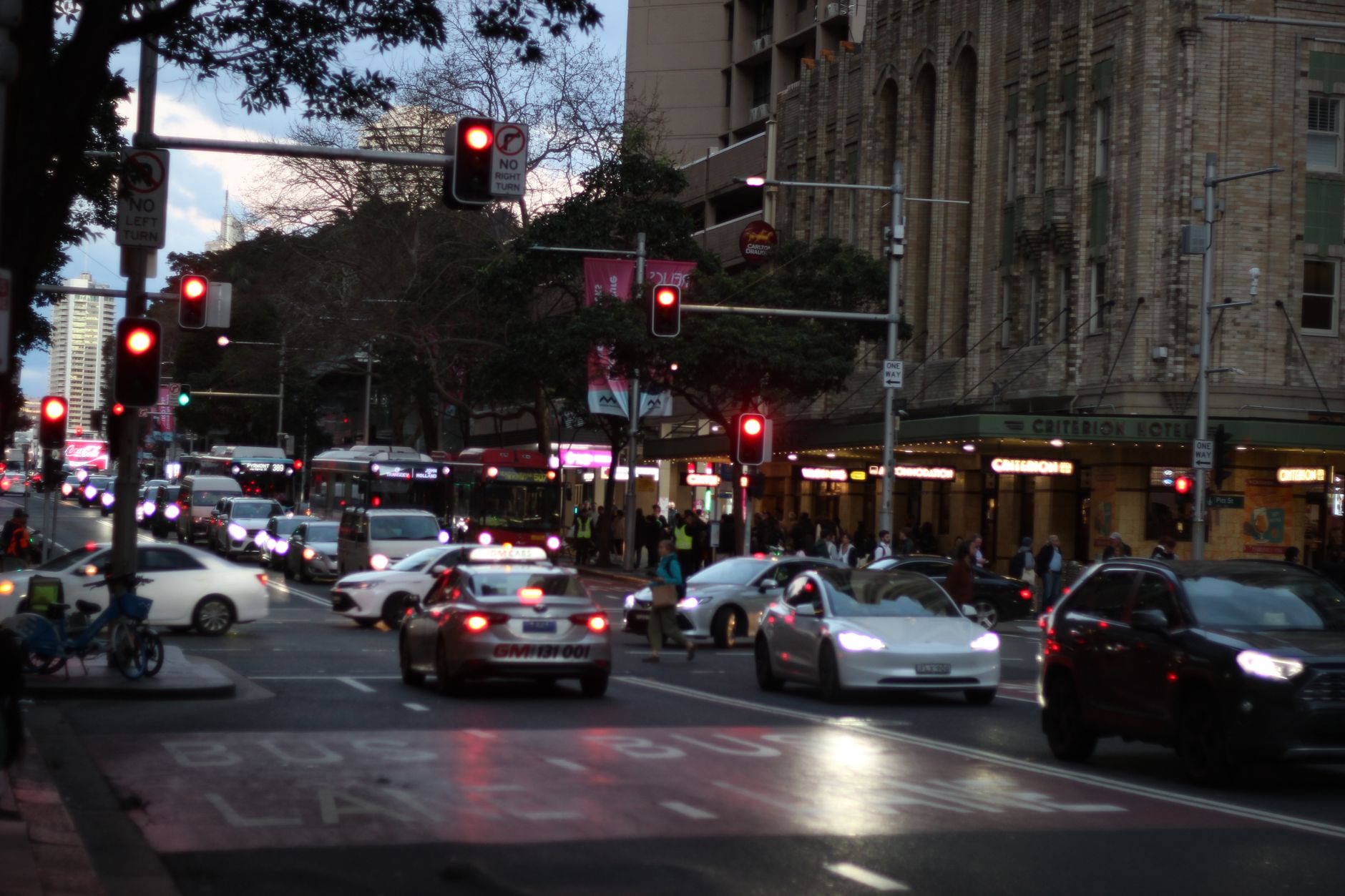
Most of us would take a shorter red-light wait tomorrow. The trick with Australia’s first AI traffic-light trial is deciding what “shorter” means once every road user wants the same slice of green. In Petrie, that means school-run parents, tradies in utes, buses chasing a timetable and pedestrians waiting at the kerb.
That is the practical test behind the planned pilot north of Brisbane. The City of Moreton Bay says it will run the trial for 12 months later this year, and iTnews reports the Australia-first site will use four cameras and two LiDAR sensors to read one intersection and adjust signal timing in real time.
The pitch is easy enough. If the system can see a lane backing up, or spot that one movement has cleared while another is still banked up, it can change the sequence faster than a fixed-timing setup. Drivers will like that part. Less time staring at a red that seems to be doing nothing is a tidy weekday win.
The question is sharper than it sounds, as The Conversation’s analysis points out. AI does not make a neutral call by magic. People still have to tell it what counts as a good result: shifting the most cars, giving buses a cleaner run, protecting pedestrians, smoothing freight traffic or giving cyclists a safer crossing.
“The best AI traffic light is not the one that only moves cars faster. It is the one that acts as a fair referee.”
Seyedali Mirjalili, The Conversation
That line lands because it gets to the part road users will notice first. If an AI system saves one direction a few minutes by making everyone else wait longer, plenty of motorists will still call it a fail. Same if it pushes cars through neatly but leaves people on foot stranded through longer cycles.
Who gets the green first?
The case for the trial has some weight. The Conversation piece points to a Pittsburgh pilot where adaptive AI signalling cut travel time by 25%, waiting time by 40% and emissions by 20%. Serious numbers, yes, but they need context before anyone assumes the same result will pop up in suburban Queensland. One overseas example is a reason to test the idea properly, not to declare the job done.
Mayor Peter Flannery has leaned into the everyday benefit, saying the project could cut time wasted at empty reds and keep traffic moving more cleanly through the network.
“There is the potential to substantially reduce the time motorists spend unnecessarily sitting at red lights.”
Peter Flannery, via iTnews
That is the selling point, and fair enough. For anyone who spends half the week crawling through suburban bottlenecks, fewer dead red-light cycles would feel close to miraculous. Public roads, though, are shared space. Any system that optimises for one group without showing its working for the others is going to cop scrutiny.
Why this matters beyond one intersection
That is why the Petrie trial matters even if it stays small. A single sensor-packed intersection will not fix congestion across south-east Queensland. It can put the trade-offs in plain view. Do buses get a nudge because they move more people? Do pedestrians get shorter waits around schools and shops? Do turning lanes get preference at peak hour? Those are policy choices dressed up as software choices.
For Aussie commuters, that is the real story. If the pilot works, councils around the country will not just be buying smarter lights. They will be buying a set of priorities, whether that favours throughput, safety, public transport or some mix of the lot. Before more intersections get the treatment, road users will want a clear answer to the question hanging over Petrie now: when the lights get smart, whose time matters most?
Tommo splits his weekends between the high country and the footy. He writes about camping, 4WDing, fishing and the general business of being a husband and dad who still gets a leave pass. Drives a diesel he refuses to shut up about.
The DudeWorld brief
BBQ, tools, camping and footy — the good stuff, weekly in your inbox.
Subscribe