How to Win the Office Footy Tipping Comp, Statistically
Office footy tipping gets easier when you stop chasing upsets and track home ground, venue familiarity and travel instead of vibes.
Thursday arvo in an office footy tipping comp has a smell to it. Microwave leftovers. Stale coffee. Someone pretending they have not already checked the ladder twice. The bloke running the comp has posted the reminder because three people still have not tipped, and someone near the printer is explaining why a side is “due”. We call this insight. Most weeks it is just a slightly dressed-up way of talking ourselves into dumb picks.
Spreadsheet blokes and gut-feel merchants trip over the same cable. The normal office tipster is not trying to beat a bookmaker, rebuild Squiggle in the lunch break or turn Friday teams into homework. We just want to finish one or two games ahead of the room. Different job. Much lower tolerance for nonsense.
The useful frame comes from ABC’s breakdown of why AFL tipping stays weird even for the machines. Max Barry, who built Squiggle, treats a comp like a probability problem. Tony Corke, from the Matter of Stats world, is the needed skeptic, because he keeps dragging home-ground advantage back from pub myth into messy detail. Between them you get the argument that actually helps. Trust the maths, sure. First, make sure the maths is measuring the right thing. The office punter wants the honest version: can any of this beat the loud bloke in sales without turning Thursday night into tax time?
There is an edge, just not the heroic one people imagine. A smart tipping season is usually less about landing ten upsets and more about being boring at exactly the right times.
Stop trying to pick every upset
Across the two big online AFL tipping comps ABC looked at, the winners landed 165 of 207 tips, a strike rate of 79.71 per cent. Good going. Not wizardry. The average score in the biggest comp was 132.6, or about 64 per cent. Over a season, the gap between first and the middle of the pack is real, but it comes in small weekly edges, not clairvoyance.

Corke’s point lands here. The season is usually settled by the games nobody feels good about, not the obvious ones everyone circles on Monday. If you are forever hunting the upset that proves you know ball, you are often just volunteering to lose ground.
At the end of the day, the person that wins the tipping competition is usually the person who happened to do best in the coin-toss games.
Tony Corke, ABC News
For an office comp, the practical version is basic. Tip the obvious favourite when the evidence is obvious. Save the contrarian energy for matches that are genuinely line-ball. Do not burn a pick because a side is “due”, because you liked their pressure last week, or because the WhatsApp thread has talked itself into a fairy tale. Even the best punters miss more than 40 games in a season like this. A lot of the edge is just refusing to add fresh mistakes to the unavoidable ones.
From the office chair, that should feel reassuring. You do not need to know more football than everyone else in the room. You need to be a touch calmer than they are. Toss-up? Treat it like one. Obvious favourite? Stop trying to be the hero.
Home ground matters, but not in the pub-chat way
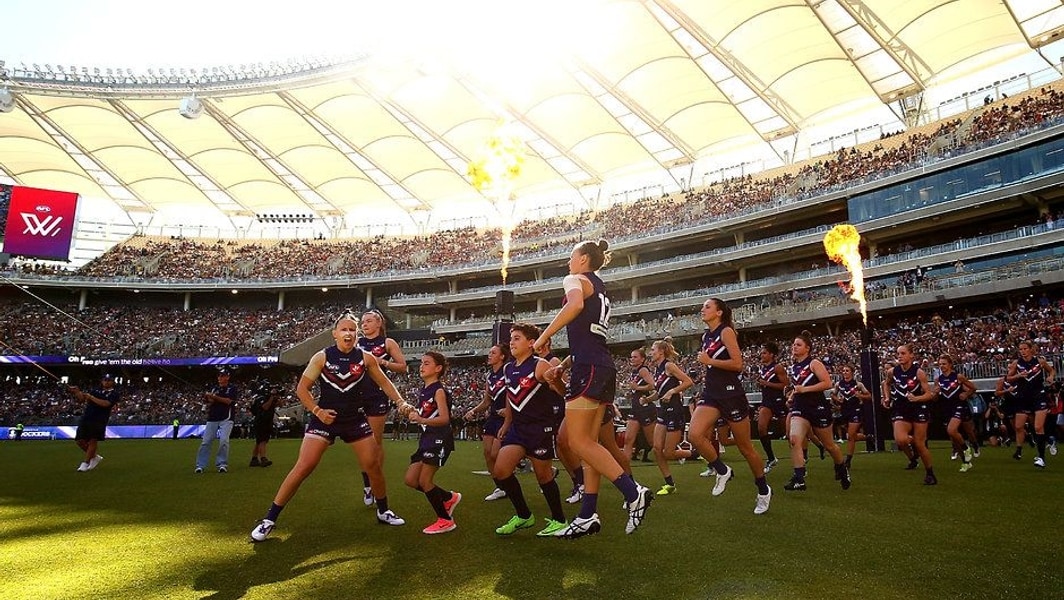
Pub-chat loves one rule that refuses to die: just take the home side. The data says that instinct is not silly, only incomplete. Across the full V/AFL history used in the ABC piece, home teams have won 57.4 per cent of games. Enough to matter. Nowhere near enough to stop thinking.

A sharper read comes from Matter of Stats’ breakdown of home-ground advantage, which treats home advantage as a bundle of effects. Crowd share matters. Venue familiarity matters. The away side’s discomfort matters. Some clubs are genuinely at home on a ground. Others are technically at home there in the same way your cousin is “good with tools” because he once hung a shelf and still brings it up.
Another useful read from AFL Lab pushes the same idea further. Travel, sleep, morale, umpiring tendencies and the difference between a true home deck and a shared tenant arrangement all muddy the picture. Good warning for tipsters. Flatten all of that into one rule and you will overrate weak home edges while missing the nasty away trips.
The lazy usable rule is this: start with the home side, then ask whether the ground is actually theirs, whether the other club travels badly into that setup, and whether this is one of those weird pseudo-home games that fools people every season. That alone makes you sharper than the bloke who only remembers the ladder and the last quarter he watched on Saturday night.
You do not need twenty years of venue splits on your phone. Just remember that not all home games are created equal, and venue familiarity can matter as much as the postcode on the fixture.
Build a lazy model, not a second job
This is where people either overcook the whole thing or give up and go back to vibes. Both are mistakes. The builder-optimist case, through AFLalytics’ warning against overfitting old venue history and Australia Sports Tipping’s home-field analysis, is that simple models still help if they stick to stable inputs. The edge is not more noise. It is keeping the few signals that behave and binning the rest.

Footy moves. Styles shift. Rules shift. What worked five or ten years ago can start lying to you. Barry makes the same point in the ABC piece when he says older data can lose relevance as the modern game changes. We would not ignore history. We also would not worship history built for a slightly different sport.
I don’t think that combination of numbers and narrative really exists anywhere else quite like it does in sport.
Max Barry, ABC News
If we were building the lazy-bloke version for a season, we would keep four things on the page: the stronger side as the baseline, a home-ground adjustment that cares about real venue comfort, a travel penalty for awkward away spots, and a humility filter for close games where the smartest move is admitting the edge is thin.
That is it. No six-tab workbook. No pretending your memory of a wet Friday in Geelong from three winters ago is a model input. No getting seduced by the one stat that just happens to support the tip you already wanted to make.
This is where the analyst and the office tipster finally line up. A small system works because it stops you freelancing. Once you have a rule set, however rough, you are less likely to get dragged around by a big win last week, a viral clip on Tuesday or the office pest who always says a side “wants it more”.
The trick is staying boring when the room gets weird
By August, especially when the run to top spot gets tight, every office comp starts feeling more dramatic than it is. That is when people abandon the method. They chase ground, fade favourites for the thrill of it, or read one result as if it rewrote the season.
Barry’s reminder helps because it shrinks the ego back to a sensible size. The models are better than most people on average. Humans still beat them in some seasons because enough humans create enough weird outliers.
The models will generally murder any small group of tipsters; it’s only when you get enough monkeys in a group that you start to get the outliers who start getting better.
Max Barry, ABC News
That sounds rude if you are sitting first in the office comp, but it is also freeing. You are not trying to eliminate luck. You are trying to make luck work a bit harder to beat you. In a small office group, discipline usually plays well because there are fewer chaos merchants to get every coin flip right by accident. In a big comp, discipline still helps, but expect one or two maniacs to run hot for a while.
The best statistical strategy, then, is not glamorous. It is dull, repeatable and resistant to your own impulse to get cute. Respect the favourite when the gap is real. Split home-ground advantage into venue comfort, travel and crowd rather than one lazy label. Keep your model small enough that you will use it in round 3 and round 23. When the game is genuinely a toss-up, accept that you are flipping a loaded coin, not uncovering secret truth.
None of that will make you unbeatable. It should give you a better shot than the office philosopher who picked three roughies because Mercury was in retrograde and the midfield mix “felt different”. In footy tipping, that is often all the edge you need.
The DudeWorld brief
BBQ, tools, camping and footy — the good stuff, weekly in your inbox.
Subscribe